Needs Versus Wants

Over the past 50 years, America has developed the world’s largest consumer culture. You really have to see this. The U.S. has the 3rd largest population in the world following China and India.  But the U.S. also has the 2nd highest rate of consumption (following the oil rich country of the United Arab Emirates), where as China weighs in at 106 out of the top 160 countries globally and India shows up at 116.

Americans are addicted to spending. Financial services companies (primarily credit cards services) spend about $17 billion each year on marketing. That works out to about $54 a person per year. That doesn’t even count marketing of retirement products, college loans, and investment products.

And how much money is spent on financial education in America?  It’s no surprise that it’s less than the amount spent on marketing. As a nation, we spend only about $670 million dollars on financial education, about $2 a person per year.


consumer debt per capita 2010-07 indiviglio-thumb-550x378-33879A 2010 ATLANTIC article,
How American’s Love Affair with Debt Has Grown, make this point well:

This chart should be startling. It shows that total debt has increased from around $1,186 per person in 1948 to $10,168 in 2010. And remember, that’s using 2010 dollars — and it doesn’t include real estate debt either like mortgages or home equity loans. This debt includes credit cards, auto loans, student loans, personal loans, and other non-real estate consumer debt.


Perhaps an even more interesting observation is the rise of credit card debt. They account for most of the “revolving” debt shown with the green line. It was virtually non-existent until 1970. Now Americans average $3,480 in credit card debt per capita. Since just 1980, that’s an increase of 285%.

What’s worst is that this revolving credit card debt phenomenon has not confined itself to just credit cards. We now treat all of the other kinds of debt, auto loans, personal loans, student loans, etc. as normal components of life, never thinking twice about the consequences.

All this spending has caused us to lose our way. It has blurred the line between needs and wants. One of the primary desired outcomes of a Monticello College education is for our graduates to distinguish and value the difference between fulfilling legitimate needs and identifying and taming unnecessary wants. Especially when fulfilling those wants are the cause of so much debt, divorce, and destruction of relationships.

MaslowIn 1943, psychologist Abraham Maslow proposed a hierarchy of human needs in a paper entitled “A Theory of Human Motivation.” When you look at the chart it is divided into 5 levels. The idea is that you can’t really work on fulfilling one level until you have satisfied the one below it. For example, you can’t real make headway with Love/Belonging until Safety has been established.

It appears to me that in our “ConsumerSphere” we spend virtually all of our time trying to hyper-fulfill the first two levels–allowing ourselves to engage in continuous and lifelong debt, which then becomes a serious impediment to levels 3, 4, and 5.

It is hard to feel good about ourselves and it is hard on relationships when we are concerned about paying bills that never seem to end and which non-payment of actually could put us in jeopardy of losing Safety.

Our goal is to education our students to adopt a more grounded and minimalistic view regarding the needs of clothing, housing, entertainment, and even food.  By not going into debt for these things, they will immediately find themselves in a stable financial situation that tends toward the development  of the Love/Belonging and Esteem levels and gives them a good shot at the positive aspects of Self-Actualization.

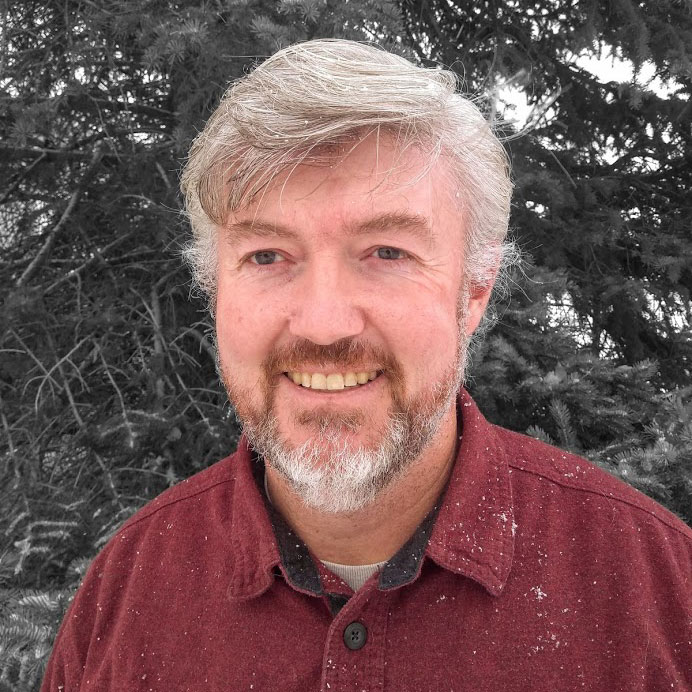


Krislyn Elliott & Lauren Swanepoel

Krislyn Elliott and Lauren Swanepoel act more like sisters than moms as they take really slow walks through the woods together, looking at and taking pictures of every plant they see & wishing they could remember their names and uses more thoroughly. They also like concocting herbal teas, salves, tinctures and strange drinks.

Krislyn is from Utah and has loved learning about plants since an unusually cool high school biology teacher took his classes on neighborhood botany walks. She has always been fascinated and constantly amazed at the power and beauty of plants.

Lauren is from South Africa, she and her family emigrated to Utah almost 10 years ago. They have fallen in love with the area and know more about this state & the great places to explore here than most Utah natives.

We both feel strongly about taking care of our families with natural methods and the abundant medicine we have growing right around us. We are trying to learn as much as we can about our magical local plants and are looking forward to sharing some of our favorites with you.

William DeMille

Director of Georgic Develeopment

William DeMille is a lifelong vegetable farmer. He studied Horticulture and Agronomy at Northwest Missouri University, Maryville. He holds a certificate in aquaponic engineering and production from Cornell University, NY, and another from GrowHaus Aquaponics in Denver, CO. He also studied soil regeneration and is a graduate of Dr. Elaine’s Soil Food Web School. He is the Director of Georgic Development for The Center for American Legacy Studies.

William is a farm consultant establishing several agricultural startups since 2005 in Missouri, Oregon, Colorado, Utah, and Nevada and he currently manages 2500 acres of grassland for the Ruby Mountain Foods Company.

His latest venture is a market gardening school called Georgic Revolution where he teaches a 17-week course onsite in Nevada covering soil health and vegetable production without the use of fertilizers, pesticides, herbicides, etc. and where he operated a soil lab.

William lives with his wife Vernie in the snow capped mountains of Northern Nevada.

Lloyd Nelson

World Renown BD Expert

Lloyd Nelson has been practicing the art of Biodynamic (BD) Agriculture for over twenty years. He is a BD preparation maker, builder, artist, farmer, arborist, BD educator & consultant. He is co-founder of Biodynamic Source – a Colorado based non-profit specializing in high potency BD preparations – and he owns and operates a Biodynamic spray, fertilizer and consultation service. He has worked with small and large scale farms, vineyards, and orchards to transition to sustainable Biodynamic land management and Demeter BD Certification.

Vern Cox, PhD

Educator

Vern Cox is married to Joyce Christensen and they have 8 children. He has 3 earned degrees, a BA in psychology, and both a Master’s degree and a Ph.D. in marriage and family therapy.

He has had a diverse and interesting career that started with the Bureau of Land Management, followed by a stint as a Learning Disabilities teacher, and finally a marriage and family therapist, working his way up to executive director of the High Country Counseling and Resource Centers that served two counties in Wyoming.

Dr. Cox served for several years on the board of a charter school. Dr. Cox remains heavily involved in his community and the home schooling movement.

He has extensive background in marriage and family counseling, having held a number of administrative positions during his first career. He holds a BA in Psychology and both a Masters and PhD in Marriage and Family Therapy. He lives with his wife and several married children on their multi-generation farm in Southern Utah.

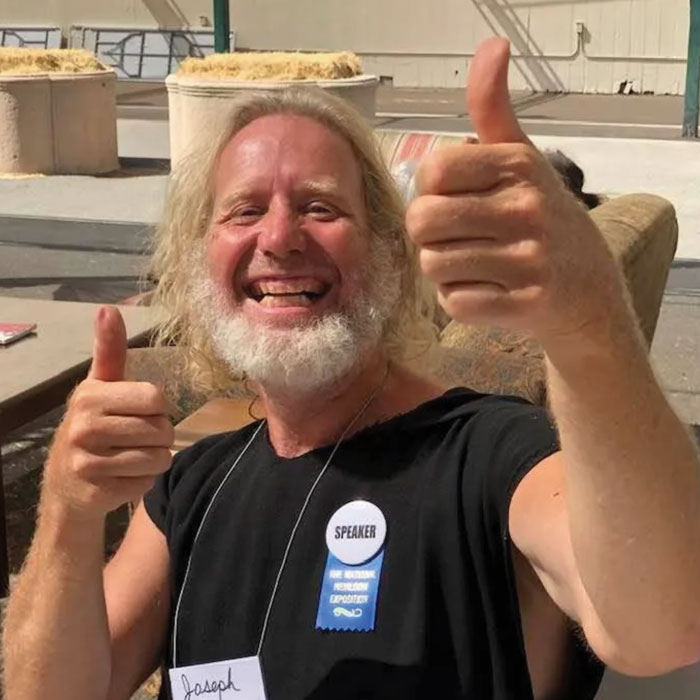
Joseph Lofthouse

Educator

Joseph adopted the principles of landrace gardening in response to the harsh growing conditions in a high-altitude, short-season, desert garden. Instead of relying on expensive poisons, labor, and materials to coddle the plants, he encourages genetic diversity, cross-pollination, and survival of the fittest, allowing the plants to adapt themselves to the current and ever-changing ecosystem, thus simplifying gardening and seed saving. Joseph is the author of Landrace Gardening: Food Security Through Biodiversity and Promiscuous Pollination. Joseph loves eating, farming, swimming, hot-springs, sunbathing, bird-watching, running, yoga, leggings, kilts, playing guitar, singing, and living habitually barefoot.

Dan Brooks

Educator

Dan Brooks was born and raised in the Pacific Northwest. During his first career, he spent 20 years working in and managing high-end restaurants and golf courses including extensive banquet/special events services and ice sculptures.

For the past 23 years, Dan has been a successful entrepreneur and family business owner in Las Vegas. He and his wife have 4 children and 11 grandchildren. He serves as a trustee for The Center for American Legacy Studies.

Shanon Brooks, PhD

Director

Shanon Brooks is the director of The Center for American Legacy Studies, an institution dedicated to helping families embrace and incorporate the Five American Ideals; Georgics, Liber, Providence, Public Virtue, and Liberty into their lives and communities. America exists because of Americans. Americans are the beneficiaries of a peculiar culture and way of living.

Over the past 75 years, that culture and way of life have been lost. Restore that culture and Americans will rebuild America to once again be worthy of John Winthrop’s 1630 admonition, “For we must consider that we shall be as a city upon a hill. The eyes of all people are upon us.”

Brooks has been a leader in alternative higher education for over 30 years, and is the author of two books: AMERICAN: Killing the American Dream and A Thomas Jefferson Education for Teens.

Dr. Brooks is a veteran of military service in the United States Submarine Fleet and holds a Bachelor’s degree in business administration, a Master’s degree in education, and a Ph.D. in constitutional law.

He and his wife Julia reside on the 80-acre conference facility of The Center for American Legacy Studies.